Heating
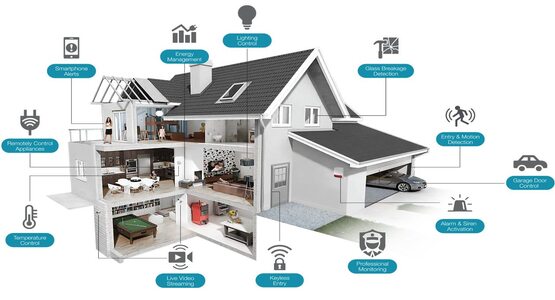
Smart home products now allow for greater control over heating devices including when products are turned on, turned off, and controlled. Smart products may be armed with temperature or humidity sensors to automatically turn on or off if certain criteria are met. This line of smart home innovations also extends to air conditioners.
Lighting
Often with the use of a mobile phone, table, or custom remote specific to a product, lighting products now enhance the capabilities of homeowners. Lights can be switched on and off, placed on a schedule, or set to change based on sunrise or sunset times. Like some more traditional products, lights can often set to change based on motion. Smart bulbs can communicate over Wi-Fi and display statistics or metrics to your phone.
This lighting category may also contain smart home products that control or prevent light. Automatic blinds may be installed and set to close based on sunrise schedules. Alternatively, electronic curtains allow users to manage their blinds using a handheld device.
Audio/Visual
One of the more fun aspects of smart homes, many entertainment products are now heavily connected to each other and can be controlled with a single remote. Television and speakers now have greater capabilities to be played on command using applications, including being maintained on a schedule or being voice-controllable.
Security
One of the most reasonable aspects of a smart home is the enhanced security capabilities. Many products now have camera capabilities that track motion, capture video, or allow for live video feeds. This may be installed to sync with a ringing doorbell or set to display on certain areas of your property. These videos may allow for video-calling with the individual at your door, including audio capabilities.
Many smart homes are also refit with modern security kits. This includes motion sensor detectors when individuals should not be home, home monitoring, notifications and alerts of suspicious behavior, and the ability to lock doors or windows remotely using a phone.
Other
A very large section of smart homes relates to digital assistants or home hubs. These products are often interacted with using your voice and can take commands, field questions, organize your calendar, schedule conference calls, or provide alerts. Though not specifically related to one's home, these digital assistants provide a broad range of controlling smart assets, their schedules, and their statuses.
Smart smoke and carbon monoxide detectors not only sound an alarm but can be synced to your phone to alert you should you be away from your property. These devices can often be set up to send emergency notifications to specified contacts.
Automated irrigation systems have had the ability to be programmed for a while. Now, smart irrigation systems field climate and environmental conditions an factor those traits into existing water schedules. Smart irrigation systems monitor moisture-related conditions and strive to conserve water.